Sv
Sv  En
En Share with


Blog
Why does the open-plan versus enclosed debate keep surviving even when it produces weak decisions? One reason is that office type is easy to talk about but too crude to diagnose performance. This article explains why workplace productivity analysis should focus on task fit, interaction control, layout variety and user profiling before teams start defending one office label over another.
Office type is the wrong starting point for productivity analysis
The paper by Haynes, Suckley and Nunnington is useful because it challenges a familiar shortcut. Instead of proving that one office type is best, it shows that productivity benefits and penalties appear across both open and enclosed environments.
That matters because workplace strategy often gets trapped in typology debates that sound decisive but explain very little. If multiple office types can generate both benefits and penalties, then the real strategic question sits deeper than the floorplan label.
Variety, interaction control and downtime matter more
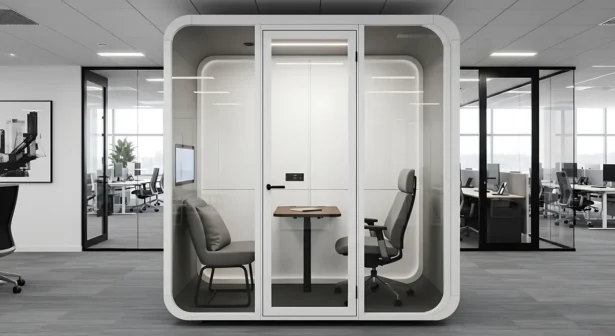
According to the study, the strongest contributors to perceived workplace productivity were variety of physical layouts, control over interaction and the downtime enabled by social interaction points. That is a much richer model than the usual focus on openness versus enclosure.
It suggests people need access to different conditions, the ability to regulate interruption and places where informal contact supports recovery rather than constant noise. In workplace terms, productivity depends on how well the environment lets people move between work modes.
For a related productivity lens, see activity-based office productivity depends on workplace conditions, not concept labels.
Designing for one dominant office logic creates avoidable misfit
One of the most valuable ideas in the paper is its challenge to the assumption that all work can be supported well enough by one dominant office type. That assumption still shapes too many projects.
Writing, analysis, coordination, recovery and short problem-solving exchanges do not require the same environmental conditions. When organisations force those activities into one dominant logic, performance problems are often treated as cultural issues rather than as evidence of design misfit.
Occupier profiling is a more useful move than concept preference
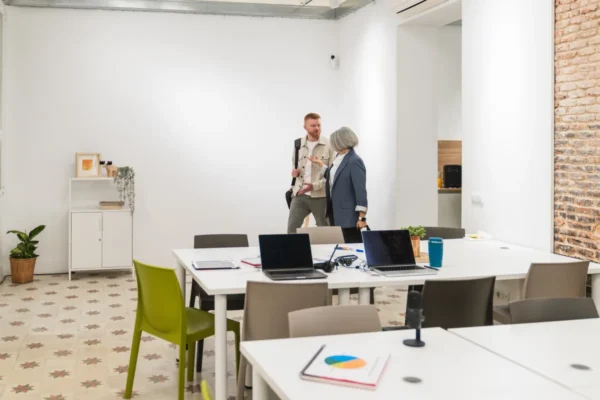
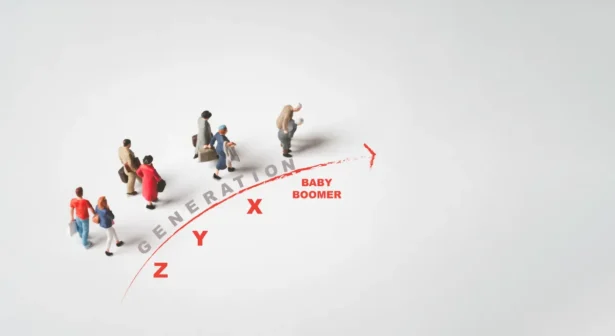
The study also draws attention to age and gender differences in how the office environment was experienced. The point is not to design around simplistic demographic stereotypes. The point is that the average user is a poor basis for workplace decisions.
Workplace productivity analysis becomes more useful when it profiles tasks, exposure to interruption, privacy needs and likely sources of friction across groups. That creates a much stronger design brief than choosing a concept first and rationalising it later.
Privacy and communication need to be managed together
The paper is also a reminder that interaction is not automatically productive. Some contact helps work move faster. Some interruptions degrade concentration and create switching costs.
That is why control matters so much. A productive workplace is not one that maximises openness. It is one that helps people move between focus, communication, coordination and downtime without constant environmental conflict.
This connects directly to flow depends on whether office type fits the work pattern, where the deeper issue is again the relationship between task profile and environmental support.
What a stronger workplace productivity analysis looks like
A more credible assessment model would test:
- which work patterns dominate in the team or function
- how much uninterrupted work key roles require
- where spontaneous interaction creates value and where it creates cost
- which settings are missing or overused
- which user groups experience the same environment differently
That kind of analysis produces better decisions than another round of office-type ideology.
Why this matters for workplace strategists
This paper is useful because it sharpens the analytical discipline behind office decisions. It shows that productivity questions should be translated into fit questions, profiling questions and control questions before the workplace brief is finalised.
That is exactly where workplace strategy can add value: by replacing concept preference with a better decision base.
Source: Journal of Corporate Real Estate, Workplace productivity and office type: an evaluation of office occupier differences based on age and gender, published 2017.
Next step
Build a stronger decision base for workplace productivity
If your team needs a more robust way to connect workplace design decisions to task fit, user profiling and performance support, Workplace Strategist offers courses, training and practical frameworks . You can also contact Workplace Strategist to discuss how a sharper analytical method could support your next strategy cycle.
FAQ
Does this study prove one office type is best for productivity?
No. It suggests productivity depends more on fit, variety and control than on one office type alone.
What does interaction control mean in practice?
It means people need enough influence over interruptions and contact so that communication helps work instead of constantly disrupting it.
Why is profiling occupiers useful?
Because different groups and work patterns can experience the same workplace very differently. Profiling helps teams design for real variation instead of an imaginary average worker.
What should teams analyse before choosing an office concept?
They should analyse work patterns, privacy needs, interaction demands, missing settings and likely sources of environmental friction.